A Product Comparison Table That Ends the 'Which One?' Emails
Build a shopper-friendly product comparison table for your category page: the right rows, honest differences, and a nudge toward the best-fit option.
Customize this prompt
Fill in the fields below — the prompt text updates automatically. [BRACKETED] words are placeholders you replace.
The prompt
You are an e-commerce merchandising copywriter. Build a product comparison table for [STORE_NAME]'s [CATEGORY_NAME] category page, comparing [PRODUCT_A] at [PRICE_A], [PRODUCT_B] at [PRICE_B], and [PRODUCT_C] at [PRICE_C] — aimed at [TARGET_SHOPPER].

Choose the eight most decision-relevant rows from [KEY_SPECS] — the ones that actually change a purchase decision — and present each row so the differences are instantly visible. Add a plain-language 'best for' line under each product name.

Then write a 60-word intro paragraph above the table that frames the choice honestly, and a 'still not sure?' block below it that asks two quick self-qualifying questions and points each answer at one product.

Rules: no fake differences — if two products share a spec, say so; mark the best-value pick with a one-line reason, not a star badge. Keep every cell under 12 words.
How to use it
- Pick the three products shoppers confuse most and gather their real specs.
- Paste the prompt and check the eight chosen rows are the ones that drive decisions.
- Verify every price and spec is current — tables go stale fast.
- Publish above the fold on the category page, not buried below reviews.
- Watch support tickets for a month; the 'which one' questions should drop.
Customization tips
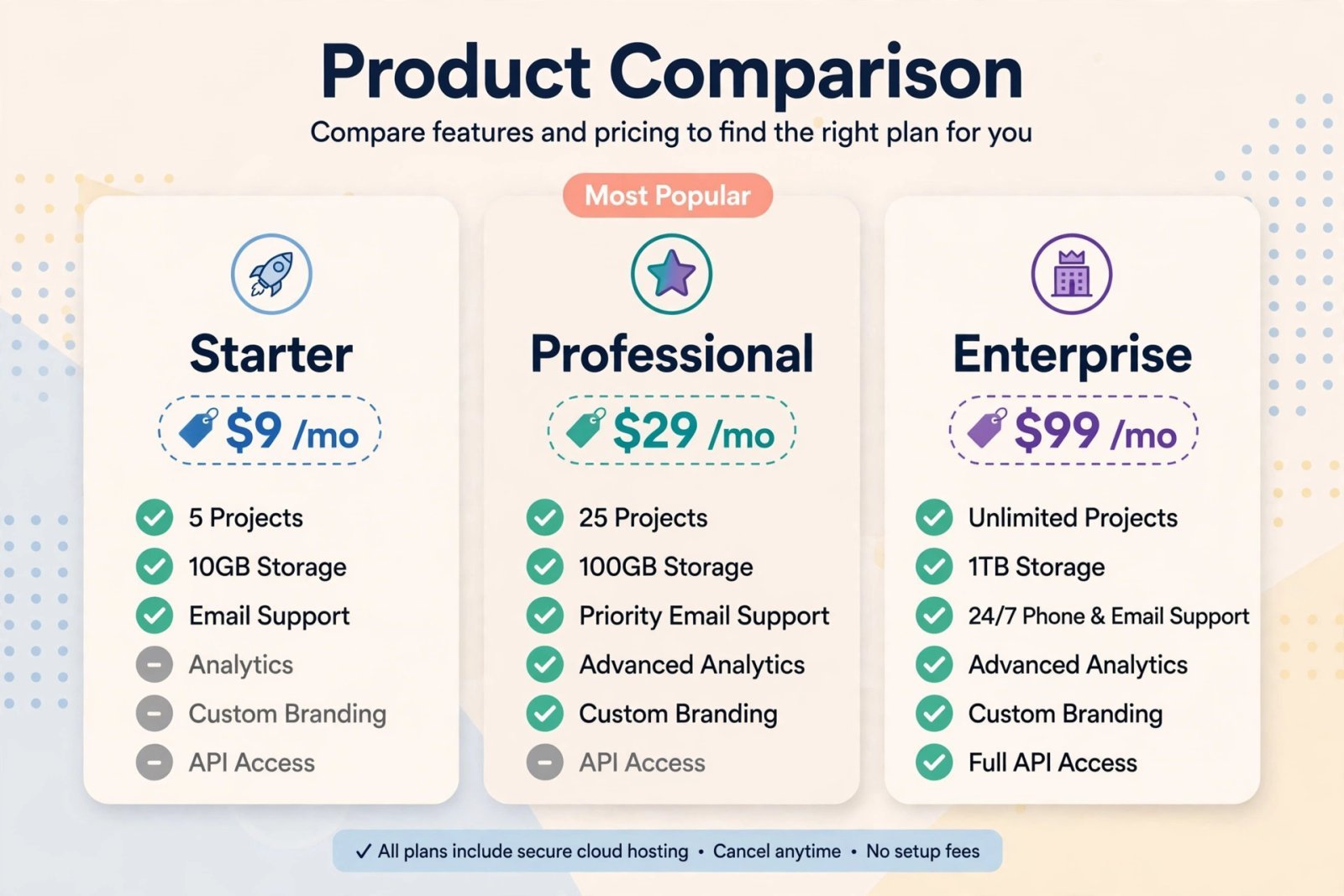
Reuse for SaaS pricing, course bundles, or service tiers — the row-selection logic is the same anywhere shoppers compare options.
Example use case
E-commerce owners and category managers cutting comparison questions and lifting add-to-cart rates.
Frequently asked questions
How many products should a comparison table include?
Three is the sweet spot. Two feels thin, five overwhelms — three gives shoppers a clear low, middle, and premium choice.
What if two products share most specs?
Say so honestly in the table. Shared specs build trust; invented differences destroy it when the product arrives.
Share
Tags: e-commerce product comparison category page conversion optimization product pages online store merchandising customer experience
Reviewed by the PromptVault editorial team on October 20, 2026.
Source notes: Daily pipeline 20261020 batch 8