Build a Source Credibility Checklist for Research
Score any source before you cite it, with a checklist that catches biased, outdated and second-hand claims early.
Customize this prompt
Fill in the fields below — the prompt text updates automatically. [BRACKETED] words are placeholders you replace.
The prompt
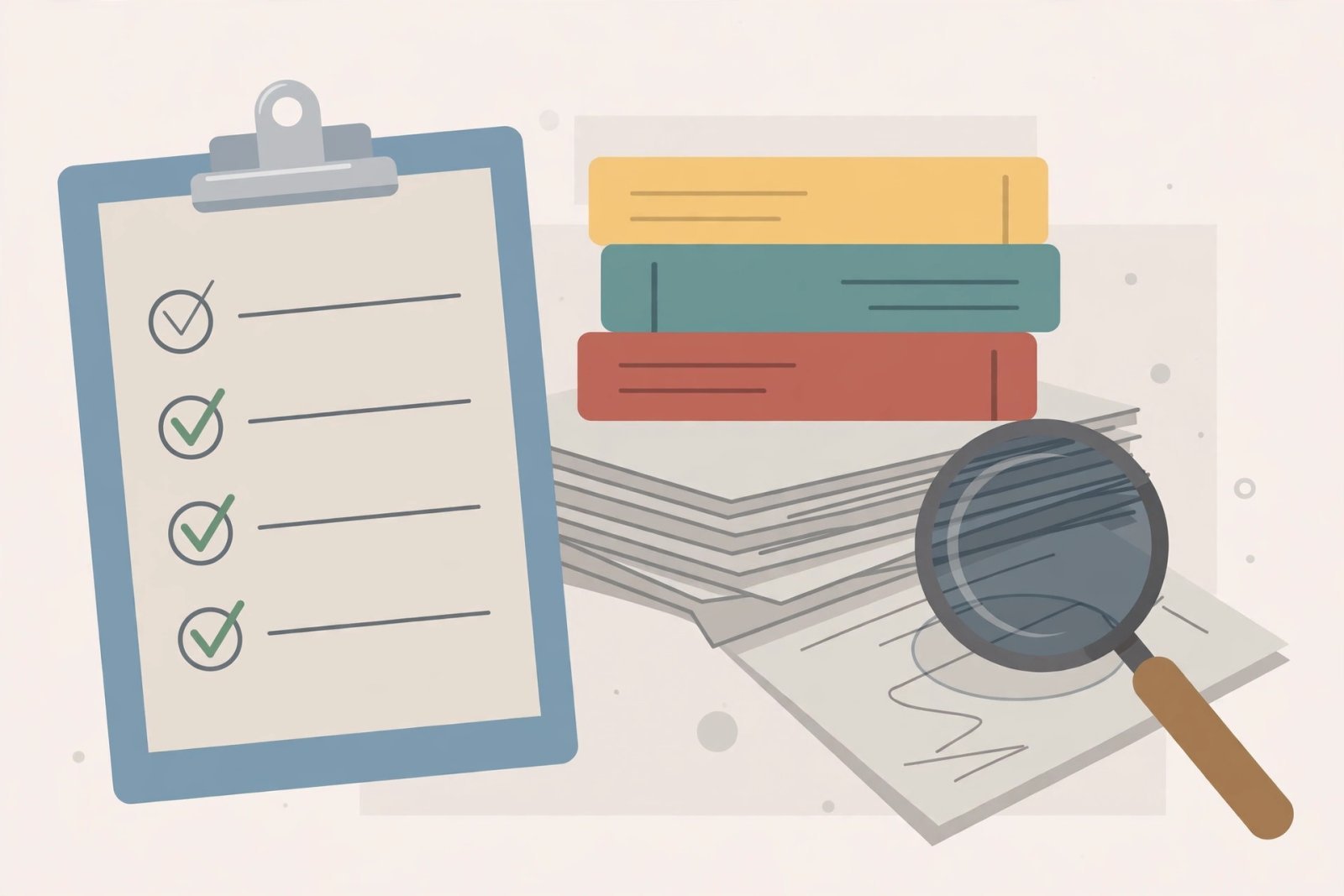
You are a research methods coach. Create a source credibility checklist for [FIELD] research that I can apply to any article, report or dataset. The checklist must cover: author expertise and affiliations, publication type and peer review, date and whether the data is still current, sample size and method where relevant, funding or sponsor influence, and whether the claim is first-hand or quoted from another source. For each check, give a pass/fail question, a one-line explanation of why it matters, and a red-flag example. Then apply the checklist to [EXAMPLE_SOURCE] and show the worked result with an overall verdict: cite confidently, cite with caveats, or do not cite. The checklist should fit on one page and use plain language suitable for [AUDIENCE].
How to use it
- Define the field and audience for the checklist.
- List the credibility checks that matter most in that field.
- Generate the one-page checklist with red-flag examples.
- Apply it to a real example source and review the verdict.
- Keep the checklist beside you whenever you gather sources.
Customization tips
Fill in [FIELD], [EXAMPLE_SOURCE] and [AUDIENCE] to generate your checklist.
Example use case
Students, writers and analysts who cite sources and want to catch weak ones before publication.
Frequently asked questions
Is a peer-reviewed source always trustworthy?
Not always. Check the journal, the date, the sample and the funding too; peer review raises the bar but does not remove the need for judgement.
What is the fastest credibility red flag?
A bold claim with no named author, no date and no primary source. If you cannot trace a claim to its origin, do not cite it.
Share
Tags: research source evaluation critical thinking research methods information literacy
Reviewed by the PromptVault editorial team on October 24, 2026.
Source notes: Daily pipeline 20261024 batch 10

