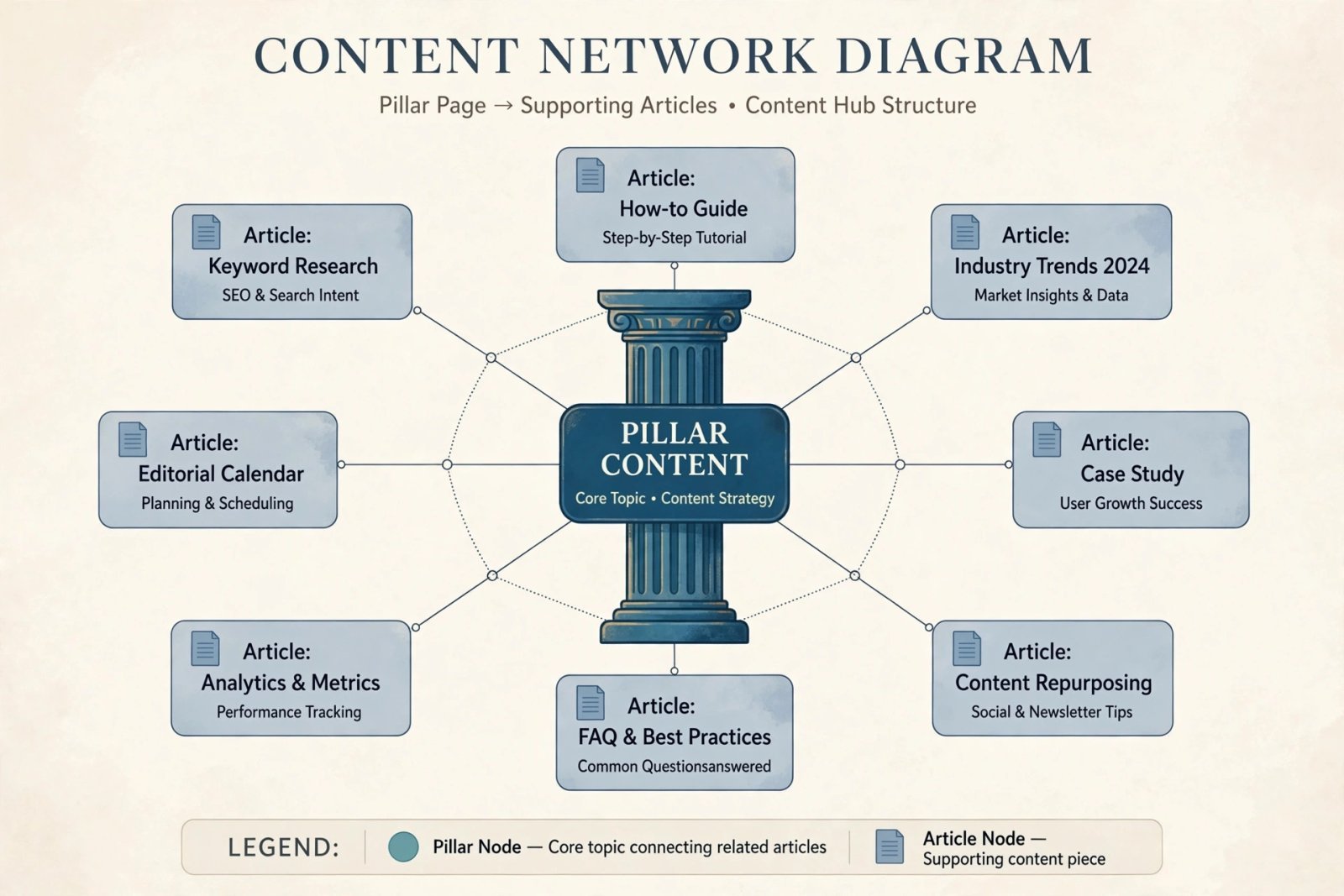
Connecting Fifty Blog Posts With a Practical Internal Link Map
A practical internal linking plan that connects fifty blog posts into clusters Google can understand.

Customize this prompt
Fill in the fields below — the prompt text updates automatically. [BRACKETED] words are placeholders you replace.
The prompt
Build an internal linking plan for a blog with [TOTAL_POSTS] posts about [BLOG_TOPIC], run by [SITE_NAME]. Group the posts into [NUMBER_OF_CLUSTERS] topic clusters, name each cluster, and pick one pillar page per cluster ([PILLAR_PAGE_1], [PILLAR_PAGE_2], and the rest). For every cluster, list which posts link up to the pillar, which posts link sideways to each other, and the exact anchor text for the three most important links. Set a rule for how many internal links each new post must add ([LINKS_PER_POST]), a rule for fixing orphan posts with zero inbound links, and a monthly check to find and repair broken internal links. End with a one-paragraph summary of the expected result after [TIMEFRAME].
How to use it
- Count the posts and group them into topic clusters.
- Choose one pillar page for each cluster.
- Map the upward and sideways links with anchor text.
- Set the links-per-post rule and the orphan-post fix.
- Add the monthly broken-link check and the expected result.
Customization tips
Change the post count, topic and cluster number to fit any blog.
Example use case
Use it when a blog's posts are disconnected and need a clear internal link structure.
Frequently asked questions
What is an orphan post?
A published post that no other page on the site links to, so readers and search engines struggle to find it.
How many internal links should a post have?
Three to five relevant links is a good default; more is fine when every link genuinely helps the reader.
Share
Tags: internal linking seo site structure topic clusters pillar pages blog seo strategy link building
Reviewed by the PromptVault editorial team on November 26, 2026.
Source notes: Daily pipeline 20261126 batch 8