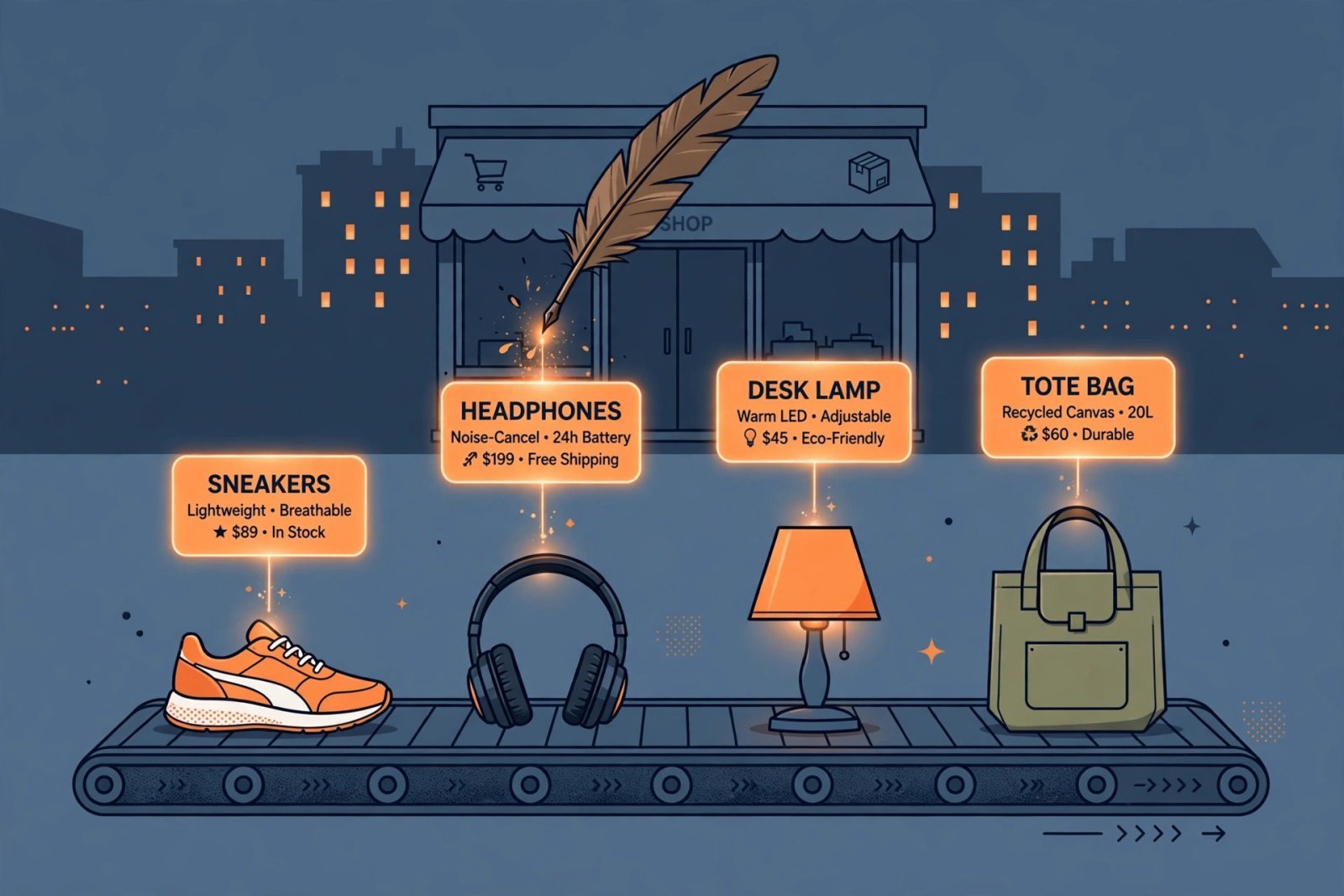
E-commerce Product Description Builder (Benefits + Specs)
Turn raw product facts into a scannable product page description: hook line, benefit bullets, specs table, and SEO-friendly closing paragraph.
Customize this prompt
Fill in the fields below — the prompt text updates automatically. [BRACKETED] words are placeholders you replace.
The prompt
Act as an e-commerce copywriter. Here are the raw facts about my product:

PRODUCT NAME: [PRODUCT_NAME]
CATEGORY: [CATEGORY]
PRICE POINT: [PRICE AND POSITIONING, e.g. mid-range, premium]
KEY FEATURES: [LIST 4–6 FACTS, materials, dimensions, what's included]
TARGET BUYER: [WHO_BUYS_THIS_AND_WHY]
MAIN COMPETITOR CLAIM TO BEAT: [COMPETITOR CLAIM, or 'none']
BRAND VOICE: [VOICE]

Write a product description with exactly these sections:
1. HOOK LINE — one sentence that makes the buyer keep reading. No hype words like 'revolutionary'.
2. BENEFIT BULLETS — 5 bullets, each starting with the benefit to the buyer, then the feature that delivers it. Format: 'Benefit — because feature.'
3. SPECS TABLE — a markdown table of the facts I gave you. Do not invent specifications I did not provide; mark anything unclear as 'check with supplier'.
4. USE-CASE PARAGRAPH — 3 sentences describing a realistic moment of use.
5. SEO CLOSING LINE — one sentence using [PRIMARY_KEYWORD] naturally.

Rules: never claim a benefit not supported by my facts. If a feature is missing that buyers in this category usually expect, list it at the end under 'QUESTIONS TO ANSWER'.
Recommended settings
Any strong general model. Temperature medium-low keeps descriptions factual and consistent across a catalog.
These are suggested starting points from our editors, not verified test results.
How to use it
- Gather the verified product facts first — never let the model invent specs.
- Fill in every placeholder, especially buyer and competitor claim.
- Run the prompt and check the specs table line by line against your source data.
- Answer any 'questions to answer' the model flags.
- Paste the sections into your product page template in order.
- Re-run per product with the same structure for catalog consistency.
Customization tips
For marketplaces with strict character limits, add placeholders for title length and bullet count. For apparel, add placeholders for fabric, fit, and care instructions so sizing guidance appears in every description.
Example use case
A store owner converts supplier spec sheets into buyer-focused product pages that answer questions before they're asked.
Frequently asked questions
How do I stop the model inventing specs?
The prompt forbids invention and forces a 'check with supplier' flag. Still, verify the table yourself — it's your product page, your liability.
Can I reuse this across 200 products?
Yes. Keep the structure identical and only change the facts; consistent formatting across a catalog builds buyer trust.
Share
Tags: ecommerce product-descriptions copywriting shopify amazon conversion
Reviewed by the PromptVault editorial team on October 10, 2026.
Free for personal and commercial use. Review AI output before publishing.