Internal Linking Plan: Connect Posts So Readers Stay Longer
An internal linking prompt that maps a site's posts into a sensible structure, lifting useful pages and helping search engines understand topics.

Customize this prompt
Fill in the fields below — the prompt text updates automatically. [BRACKETED] words are placeholders you replace.
The prompt
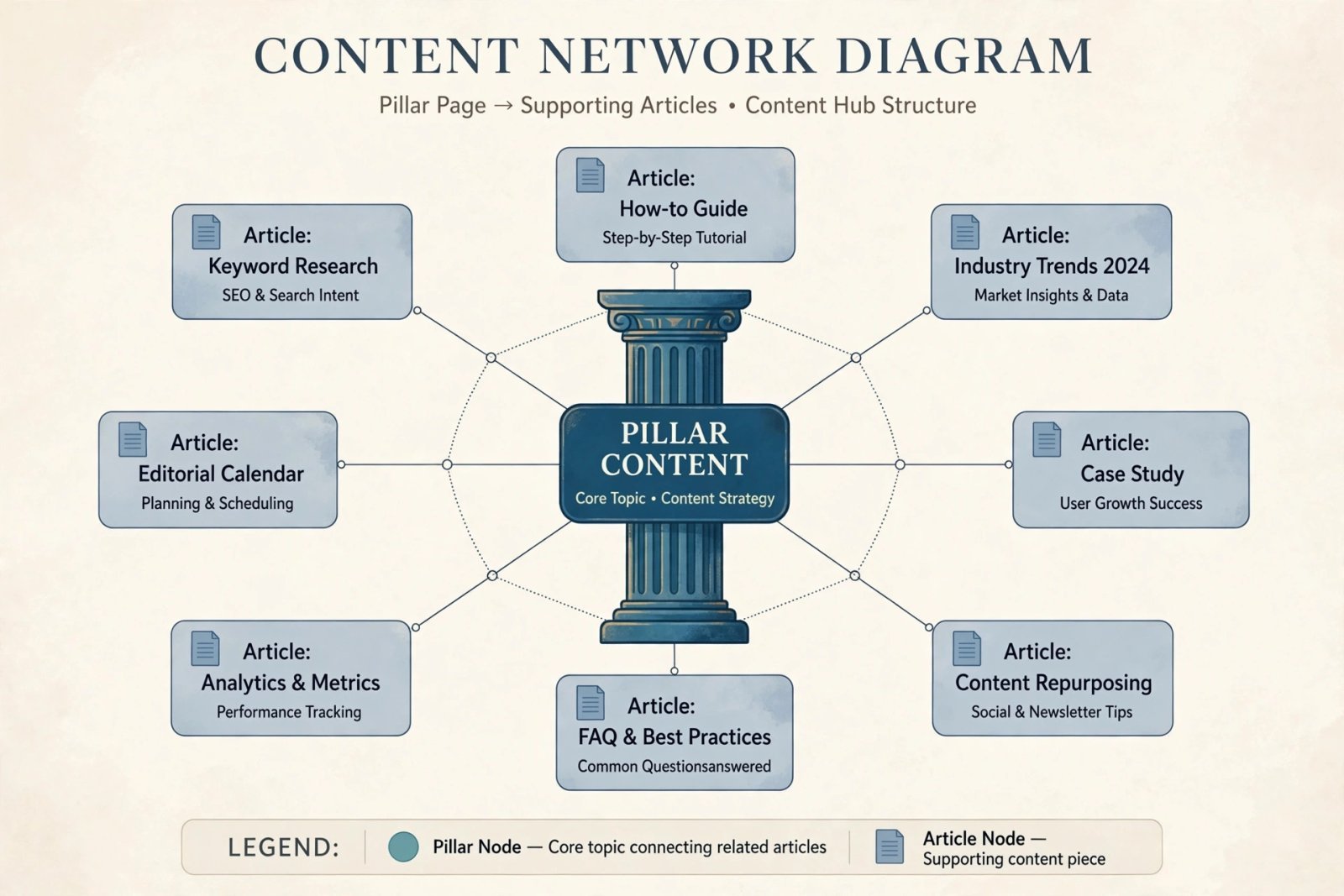
Act as an SEO strategist auditing my site about [SITE_TOPIC]. Here are my main posts and pages: [POST_LIST]. Build an internal linking plan: group the posts into three to five topic clusters, name a pillar page for each cluster, and for every post suggest two to four internal links with natural anchor text. Flag orphan pages with no links pointing to them, and posts that link out too much. Explain in two sentences per cluster why the grouping helps readers. Keep anchor text descriptive and varied, never the same exact-match phrase repeated everywhere.
How to use it
- List your posts in [POST_LIST] with titles and URLs, or paste a sitemap summary.
- Name [SITE_TOPIC] broadly enough to cover all posts but narrowly enough to cluster them.
- Review the clusters and check each pillar page genuinely covers its topic.
- Add the suggested links gradually, checking every link lands on a live page.
- Revisit the plan after publishing ten new posts so clusters stay balanced.
Customization tips
Add a column for link priority if your site has over 100 posts, so the most valuable links go in first.
Example use case
Use during a site audit, a redesign, or before a big batch of new posts goes live.
Frequently asked questions
How many internal links should a post have?
Two to four relevant links is a good rule for most posts. More is fine in long guides, but only when each link genuinely helps the reader.
Can internal links hurt rankings?
Only when they mislead: broken links, irrelevant anchors or stuffing the same keyword everywhere. Descriptive, relevant links help both readers and search engines.
Share
Tags: internal linking seo strategy site structure content clusters blogging user experience
Reviewed by the PromptVault editorial team on November 2, 2026.
Source notes: Daily pipeline 20261102 batch 8