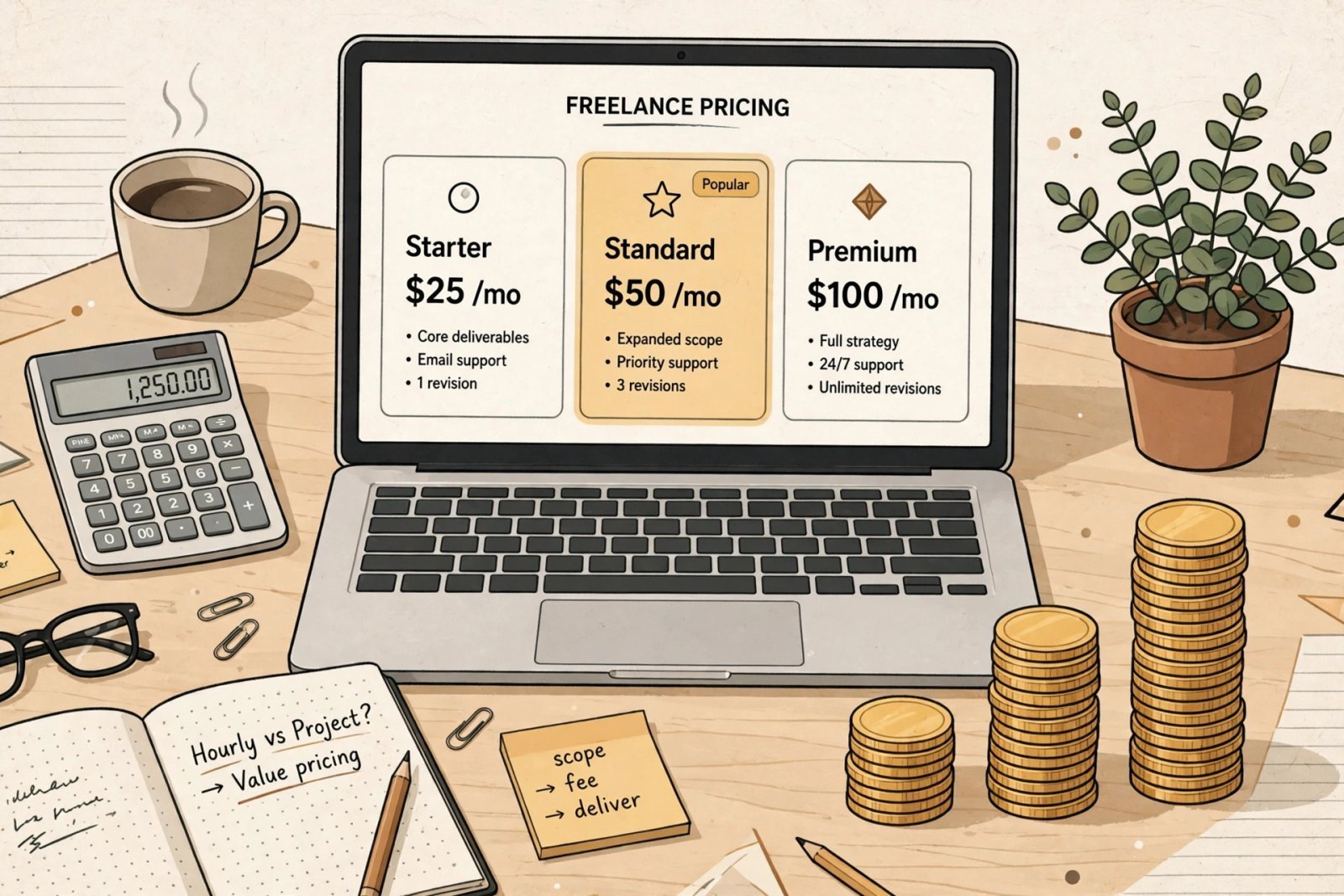
Scope-creep pricing emails for freelancers: charge fairly for extra work
A fill-in email template that tells a client the request is outside the original scope and prices the extra work without damaging the relationship.

Customize this prompt
Fill in the fields below — the prompt text updates automatically. [BRACKETED] words are placeholders you replace.
The prompt
You are an email coach for freelancers who need to get paid fairly when projects grow.

INPUTS:
- [CLIENT_NAME]: the client's name or company
- [ORIGINAL_SCOPE]: one sentence describing what was agreed (e.g., "a 5-page brochure site")
- [NEW_REQUEST]: the new ask that falls outside the scope (e.g., "an added booking system")
- [EXTRA_FEE]: your price for the extra work, or [EXTRA_HOURS] × [HOURLY_RATE]
- [TONE]: warm-but-firm, formal, or casual

PROCESS:
1. Open with one genuine positive about the project so far.
2. Quote [ORIGINAL_SCOPE] briefly, then name [NEW_REQUEST] as the addition in neutral language.
3. Present [EXTRA_FEE] as a fixed option, plus a lighter alternative (e.g., defer the feature to phase two).
4. Give a clear next step: "reply with your choice by [DEADLINE] and I'll schedule it."
5. Close in a way that keeps the relationship warm regardless of the answer.

OUTPUT FORMAT: subject line under 50 characters, email body under 200 words, and a 2-line fallback reply if the client pushes back.

CONSTRAINTS: never apologize for charging; never threaten to stop work on the original scope; keep every sentence under 25 words; do not invent new fees beyond [EXTRA_FEE].
How to use it
- Fill in the client name, original scope, new request, and your extra fee.
- Pick a tone that matches your relationship with the client.
- Generate the email: positive opener, scope reminder, two priced options, clear deadline.
- Copy the fallback reply for pushback.
- Send it the same day the new request lands, not weeks later.
Customization tips
Use warm-but-firm for long-term clients, formal for agencies, casual for solo founders. Adjust [DEADLINE] to 3-5 business days.
Example use case
Freelancers and small studios use this the moment a client adds work mid-project, so extras get priced instead of absorbed.
Frequently asked questions
What if the client insists the extra work was implied?
Refer back to the written agreement: quote the original scope line, then offer the two priced options again. Keep it factual, not emotional.
Should I offer a discount on the extra work?
Only as the lighter alternative (defer to phase two), never as a reduced fee for the same work — that trains clients to expect free extras.
Share
Tags: email-writing freelancing client-communication pricing negotiation templates
Reviewed by the PromptVault editorial team on October 12, 2026.
Source notes: Daily pipeline 20261012 batch 10