Turn a Boring Meeting Transcript Into a Blog Readers Love
Convert a dull meeting transcript or rough notes into a clear, engaging how-to blog post that hides none of the value.
Customize this prompt
Fill in the fields below — the prompt text updates automatically. [BRACKETED] words are placeholders you replace.
The prompt
You are a content editor who turns raw material into reader magnets. Below is a transcript (or rough notes) from a meeting about [MEETING_TOPIC]. The audience for the final piece is [TARGET_AUDIENCE], who cares about practical takeaways, not corporate process.

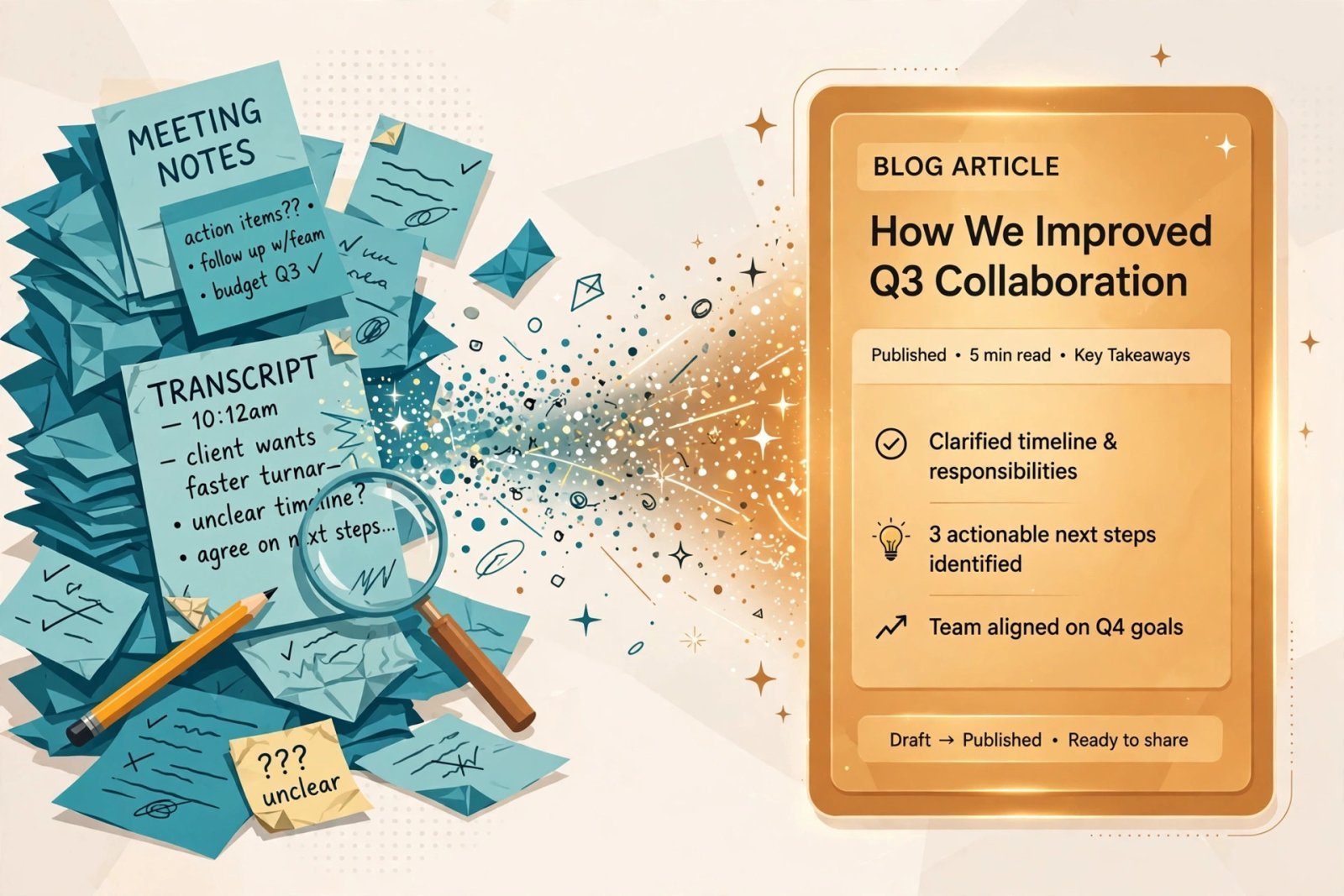
Read the transcript and extract the 3 to 5 ideas that a reader would genuinely find useful. Discard status updates, logistics, and anything that only matters internally. Structure the output as a how-to blog post: a promise-driven headline, a 2-sentence intro, then one section per idea with a bolded principle, a 3-line explanation, and a concrete example lifted from the transcript. Close with a short 'steal this for your own [MEETING_TOPIC] workflow' summary. Keep the whole post between [WORD_COUNT] words. Write in a warm, direct second-person voice. Never quote speakers by name without my permission — generalize attributions like 'one engineer suggested'. The raw transcript follows:

[TRANSCRIPT]
How to use it
- Paste the transcript and identify the single topic it is really about.
- Mark the 3-5 ideas that would help an outsider; ignore internal logistics.
- Run the prompt and check every claim against the original transcript.
- Tighten the headline until it makes one clear promise.
- Publish with a short intro explaining where the insight came from.
Customization tips
Before publishing, add one original opinion paragraph of your own that the transcript does not contain — it makes the piece yours, not a summary.
Example use case
Create a how-to blog post from raw meeting material for a company blog or personal publication.
Frequently asked questions
Do I need permission to use meeting content in a blog post?
Yes — strip internal and confidential details, get a sign-off from whoever owns the meeting, and never quote colleagues by name without consent.
What if the transcript is very long?
Summarize it yourself down to the key decisions and insights first, or feed the prompt in chunks and ask for the extraction step alone on each.
Share
Tags: content repurposing blog writing meetings how-to articles content marketing
Reviewed by the PromptVault editorial team on October 21, 2026.
Source notes: Daily pipeline 20261021 batch 10