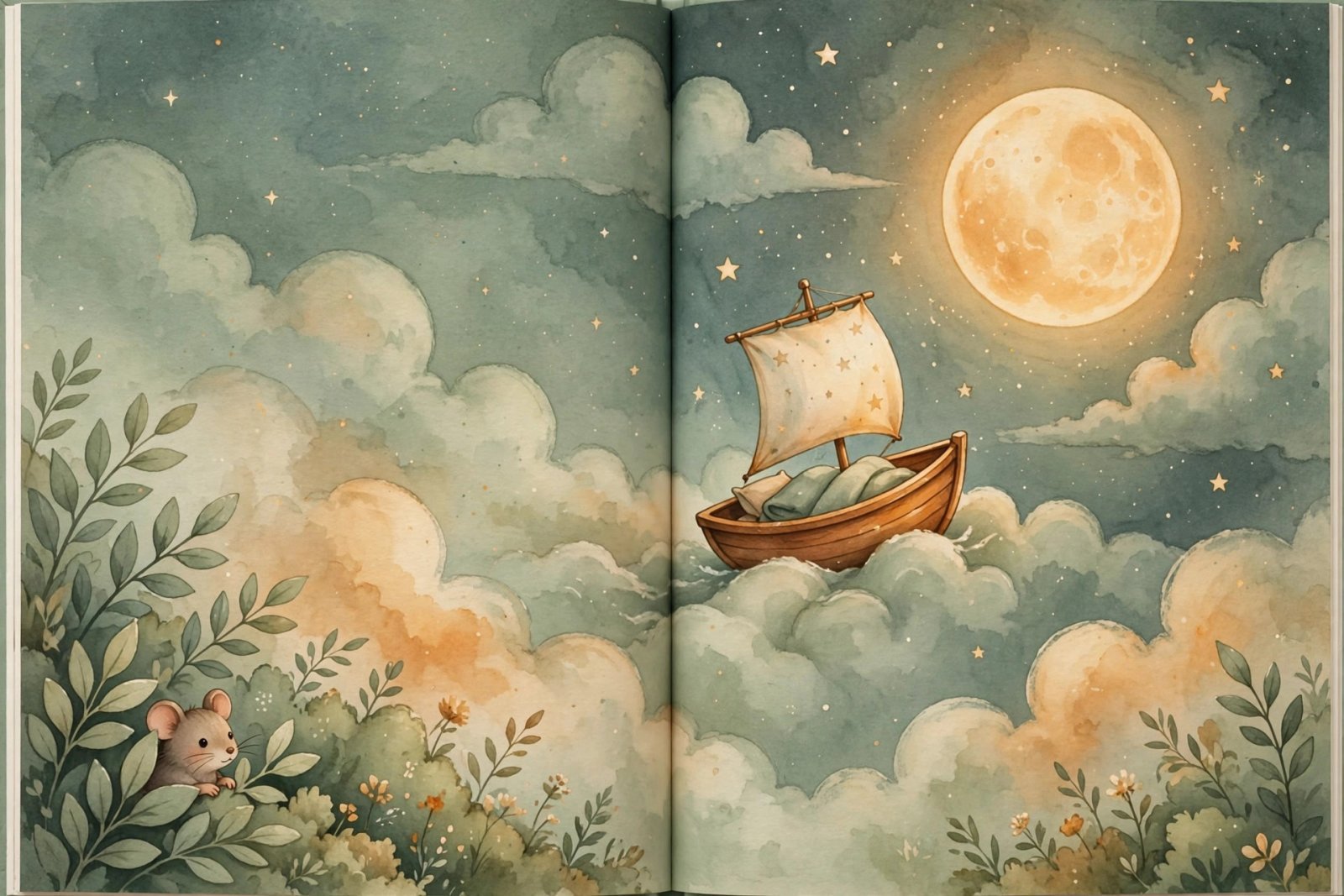
A Picture-Book Spread Layout for a Bedtime Adventure Tale
Design a cozy double-page spread for a children's bedtime book: warm illustration zone, large readable type, and a hidden detail for kids to spot.
Customize this prompt
Fill in the fields below — the prompt text updates automatically. [BRACKETED] words are placeholders you replace.
The prompt
You are illustrating and laying out a double-page spread for [BOOK_TITLE], a bedtime picture book for ages [AGE_RANGE], written by [AUTHOR_NAME]. The spread covers story beat: [STORY_BEAT] — in one or two sentences, [BEAT_SUMMARY].

Layout spec:
- Illustration zone: a warm, dreamy scene of [SCENE_DESCRIPTION] occupying roughly two-thirds of the spread; style [ILLUSTRATION_STYLE] — soft, rounded, bedtime-calm; palette limited to [PALETTE_COLORS].
- Text zone: the manuscript text of [WORD_COUNT] words set large ([TYPE_SIZE]) in [TYPEFACE], positioned bottom-left with generous line spacing for read-aloud pacing.
- One hidden detail: tuck [HIDDEN_DETAIL] into the illustration for children to spot on re-reads.

Constraints: keep the brightest light source in the illustration near the text zone so the page feels guided toward the words; avoid sharp angles and high-contrast scares — bedtime calm only; no text overlapping character faces; leave [BLEED_SIZE] bleed for print.
How to use it
- Read the story beat and pick the single most drawable moment.
- Sketch the illustration zone with the hidden detail planned in.
- Set the manuscript text large with read-aloud line spacing.
- Balance light and colour toward the text zone.
- Check the calm test: nothing sharp, scary or overstimulating.
- Apply bleed and confirm text never covers faces.
Customization tips
Change [BOOK_TITLE], [STORY_BEAT] and [HIDDEN_DETAIL] per spread; keep the palette and type rules consistent across the whole book.
Example use case
Children's book design, picture-book spreads and bedtime story layouts.
Frequently asked questions
How large should the text be?
Large enough for a parent to read at arm's length in lamplight — err bigger than you think, and never below what survives a paperback resize.
Where should the hidden detail go?
Near the edge of the illustration, half-glimpsed — close enough that a careful child finds it, subtle enough to miss on the first read.
Share
Tags: picture book children's book spread layout book illustration bedtime story editorial illustration print layout storytelling
Reviewed by the PromptVault editorial team on October 20, 2026.
Source notes: Daily pipeline 20261020 batch 7