Consensus-versus-conflict literature sweep for one question
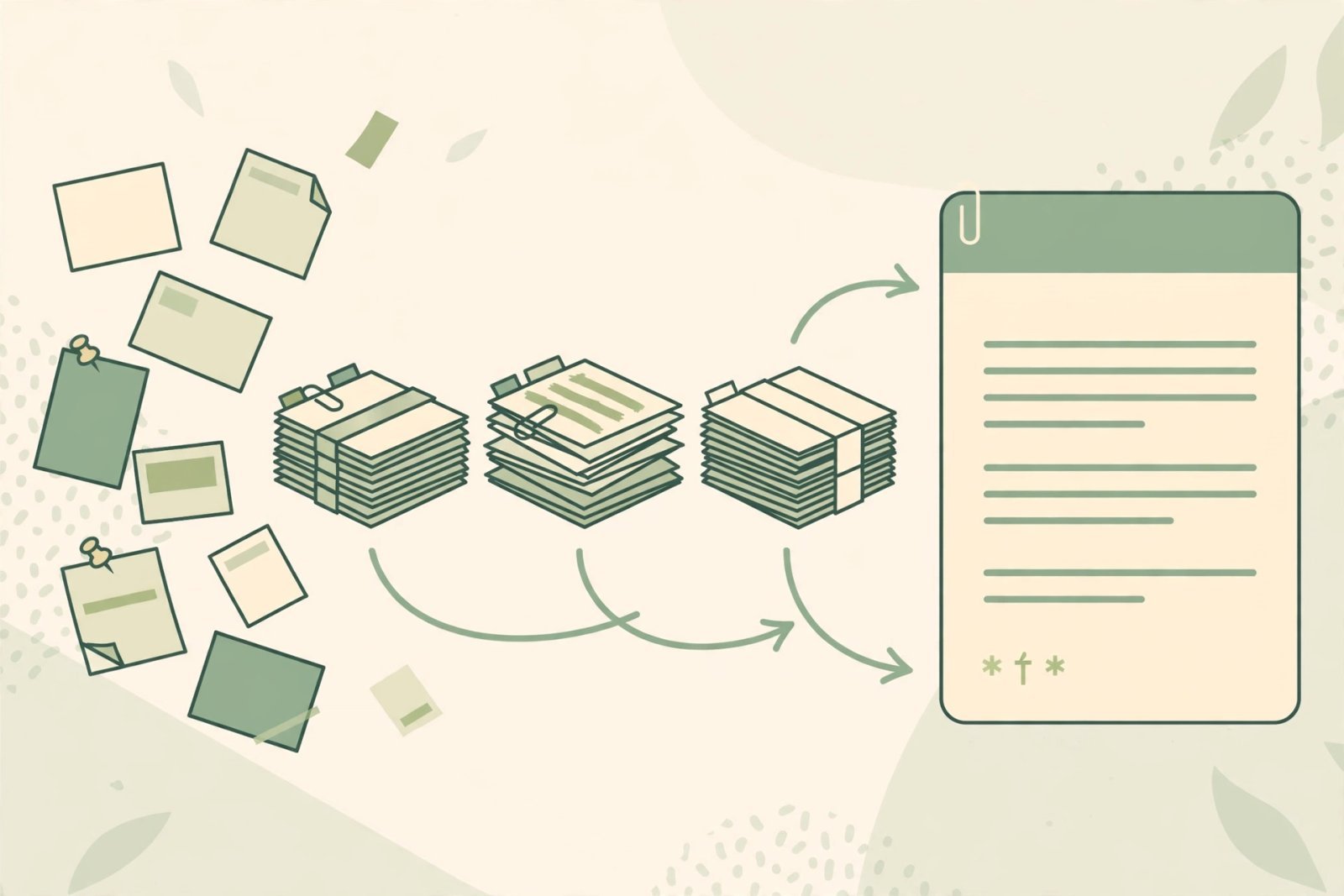
Answers one research question by mapping what sources agree on, where they genuinely conflict, and what stays unknown — every claim tied to a source.

Customize this prompt
Fill in the fields below — the prompt text updates automatically. [BRACKETED] words are placeholders you replace.
The prompt
You are a meticulous research assistant. Given the research question [RESEARCH_QUESTION], perform a structured literature sweep using the provided sources and produce a findings memo in [OUTPUT_FORMAT].

Sources to draw on:
[SOURCES]

Rules:
1. Divide findings into three labeled sections: CONSENSUS (claims supported by at least two independent sources), CONFLICT (claims where sources genuinely disagree, with each side's evidence quoted), and UNKNOWN (important sub-questions no source answers).
2. Anchor EVERY claim to a source identifier from [SOURCES] using [CITATION_STYLE]; never present unsourced claims as findings.
3. Flag each source's limits: date, methodology, sample, or funding, in one line per source.
4. Set depth to [DEPTH] (quick scan / standard / deep dive): a deep dive must surface at least one conflict the quick scan would miss.
5. Exclude anything published after [DATE_CUTOFF]; state explicitly which claims weaken if a newer source contradicts them.
6. Close with a 5-line bottom line for a decision-maker and three follow-up questions worth investigating.

If sources contradict each other, do not average them — report the disagreement and what would settle it.
How to use it
- Write one precise [RESEARCH_QUESTION] — no compound questions.
- Paste or list your [SOURCES] with identifiers, and set [DATE_CUTOFF].
- Choose [DEPTH] and your [CITATION_STYLE] (author-year, numbered, or inline links).
- Run the sweep and read the CONFLICT section twice — that is where the insight lives.
- Pick the three follow-up questions and run one of them as your next sweep.
Customization tips
Set [OUTPUT_FORMAT] to 'slide bullets' for presentations or 'annotated table' for academic use; tighten [DATE_CUTOFF] for fast-moving technical topics.
Example use case
Students, analysts, and founders who need a defensible map of what is actually known about a question before deciding.
Frequently asked questions
How many sources do I need for this to work?
Five to eight quality sources is the sweet spot for [DEPTH] set to standard. Fewer than three and the conflict section stays empty; more than twelve and the memo gets unwieldy — split the question instead.
Can I use this for topics where sources are mostly opinion pieces?
Yes, but set expectations: opinion-heavy sources land in CONFLICT or UNKNOWN more often, which is itself a finding. The source-limits rule keeps the memo honest about evidence quality.
Share
Tags: research literature review fact checking analysis evidence study skills
Reviewed by the PromptVault editorial team on October 10, 2026.
Source notes: Daily pipeline 20261010 batch 10