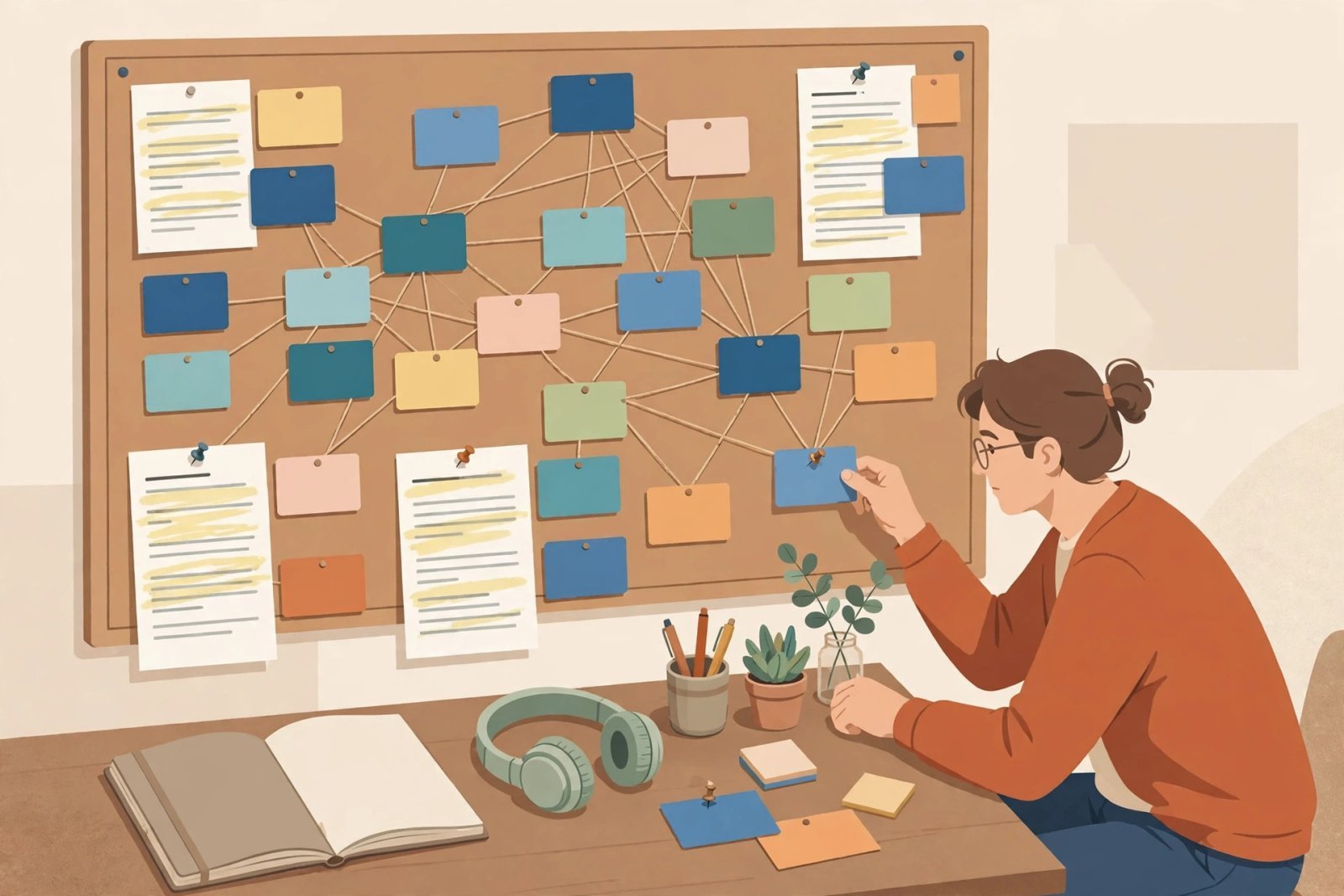
Synthesize 20 Interview Transcripts Into One Clear Report
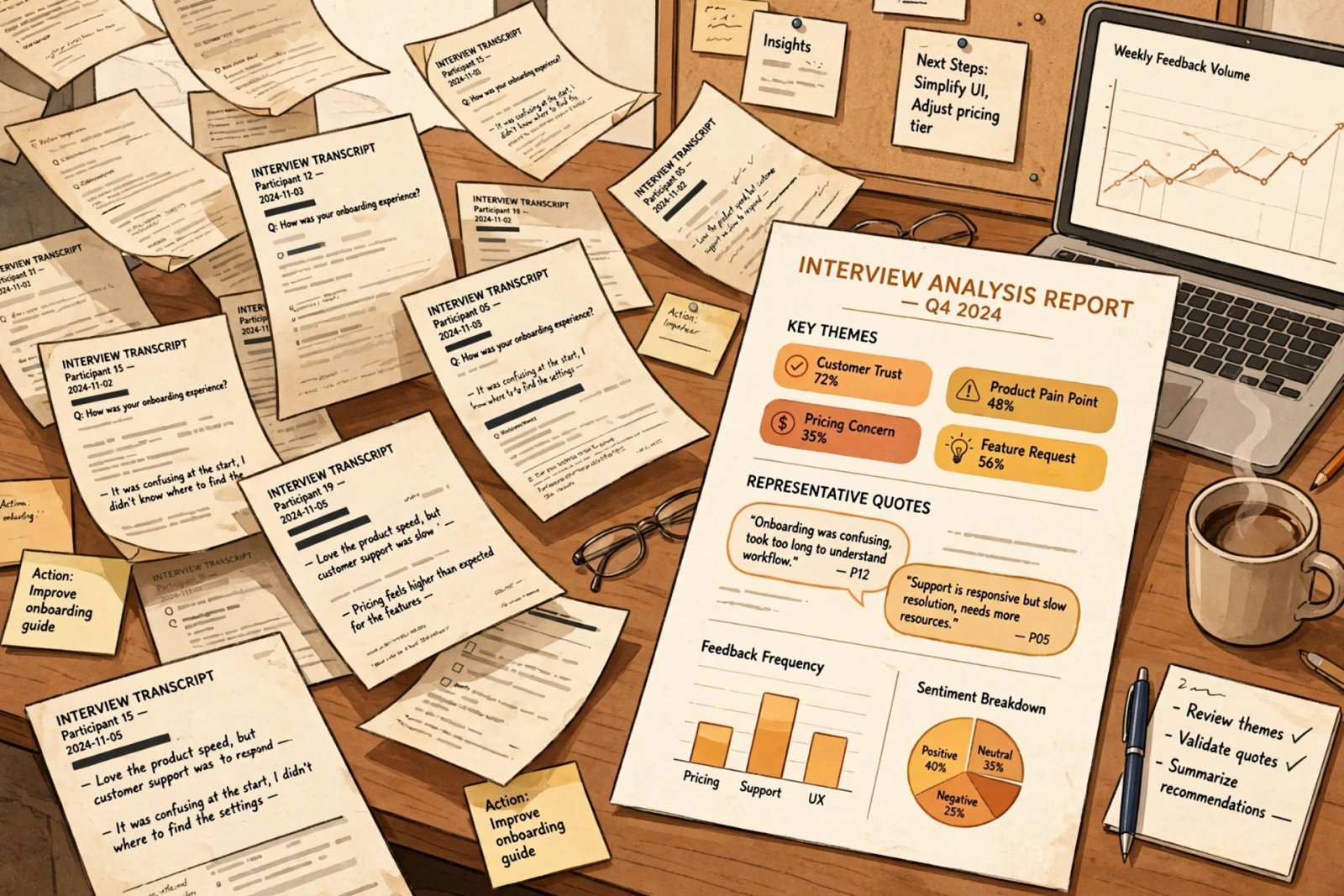
Turn a pile of qualitative interview transcripts into a thematic synthesis report with quotes, patterns, and honest caveats.
Customize this prompt
Fill in the fields below — the prompt text updates automatically. [BRACKETED] words are placeholders you replace.
The prompt
You are a qualitative research analyst. I have conducted [NUMBER_OF_INTERVIEWS] interviews about [RESEARCH_TOPIC] with [PARTICIPANT_DESCRIPTION]. The audience for this report is [REPORT_AUDIENCE], who needs to make [DECISION_TO_INFORM].

Analyze the transcripts below and produce a synthesis report:
1. **Executive summary** (5 sentences): the 3 strongest patterns and the 1 biggest surprise.
2. **Themes** (4-6): for each, a theme name, a 4-sentence description, how many participants expressed it (n=X), and 2 short verbatim quotes with participant codes.
3. **Divergent voices**: 2-3 quotes that contradict the main themes, with a one-line note on why they might differ.
4. **Gaps and silences**: what nobody mentioned that you would have expected — 3 bullets.
5. **Caveats**: sample size, selection bias, and interviewer influence, stated in 3 honest bullets.
6. **Recommendations**: 3 actions tied directly to the themes, each starting with a verb.

Never claim a theme is universal if only a few participants expressed it — always give the n=X count. Never invent quotes; every quote must be traceable to the transcript text I provide. If two transcripts contradict each other, present both, do not average them away. The transcripts:

[INTERVIEW_TRANSCRIPTS]
How to use it
- Anonymize transcripts with participant codes before analysis.
- Read all transcripts once yourself so you can spot hallucinations in the output.
- Check every quote against the source text — invented quotes destroy credibility.
- Count theme frequency manually for the top 3 themes as a sanity check.
- Present divergent voices with equal weight; they are often the most valuable part.
Customization tips
Do a 10-minute manual pass highlighting surprises before prompting — your own reading catches what pattern-matching misses.
Example use case
Turn user or stakeholder interviews into a credible qualitative research report.
Frequently asked questions
How many interviews are enough for a synthesis?
For a thematic report, 12-20 usually reaches saturation — new interviews stop producing new themes. Fewer than 8 is a set of anecdotes, not a synthesis.
Can AI really replace manual qualitative coding?
No — use it for the first pass and pattern-spotting, then verify by reading the transcripts yourself. The analyst's judgment is the method.
Share
Tags: qualitative research interviews research analysis user research
Reviewed by the PromptVault editorial team on October 21, 2026.
Source notes: Daily pipeline 20261021 batch 10